


Wait… there’s a UN Treaty for Plastic?!
When you work in a bubble, you forget there is a whole world of people who don’t swim in the same circles as you. For those of us in the ‘plastics bubble’, the next two weeks are all about the treaty, and for those not in the bubble, you may be wondering what this ‘treaty’ is. Acronyms like INC and CG mean nothing and phrases like ‘like minded coalition’ and ‘zero draft’ sound like nonsensical jargon. As someone who works in this space, these words are loaded.
I’ve been following treaty negotiations closely and I’m currently in Geneva for the latest round (INC5.2). I will be rubbing elbows with important people and advocating for the startups and innovators as part of a new role supporting the Innovation Alliance for a Global Plastics Treaty.
As I broke down what it was like to attend the UN Oceans Conference, I wanted to write an explainer about the UN Plastics Treaty. I’ll explain what the treaty is, how we got here, where we are now, and what might come next.
The Basics: What is the UN Plastics Treaty?
The UN Global Plastics Treaty is an opportunity to create an international agreement to end plastic pollution. Think of it as the “Paris Agreement” for plastic, with potential to address the root causes of the plastic crisis, not just the symptoms.
The process started in March 2022, when UN Member States adopted Resolution 5/14 at the UN Environment Assembly (UNEA) in Kenya. This resolution called for the creation of a global treaty with legally binding measures to tackle plastic pollution, including in the marine environment.
Since then, the negotiations have been unfolding through a series of formal meetings called Intergovernmental Negotiating Committees (INCs). Each INC session aims to refine and eventually finalize the treaty text, though, as with all international agreements, progress is often slow and contentious.
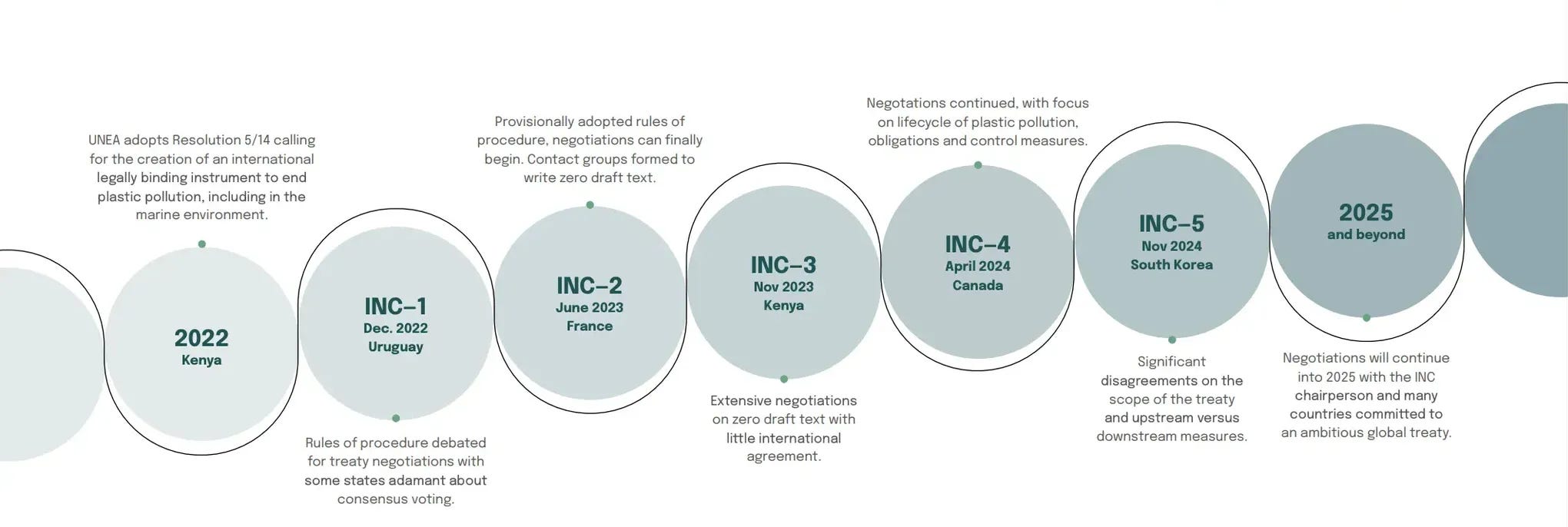
Here’s the quick timeline of the process so far, as illustrated in the figure above:
UNEA (March 2022, Kenya) Resolution 5/14 is adopted
INC-1 (Dec 2022, Uruguay): Initial rules of procedure for the negotiations are debated.
INC-2 (June 2023, France): Negotiations properly begin, with contact groups starting to shape a first draft of the treaty.
INC-3 (Nov 2023, Kenya): Work intensifies on the draft text, but disagreements emerge over key elements and definitions.
INC-4 (April 2024, Canada): Discussions focus on lifecycle measures, obligations, and control mechanisms, but divisions remain.
INC-5.1 (Nov 2024, South Korea): The intended fifth and final round highlights major disagreements over the scope of the treaty and upstream versus downstream measures.
INC-5.2 (Aug 2025, Switzerland): Second round of the fifth and ‘final-final’ negotiation session where countries are calling for compromise and confirmation.
At its core, the treaty aims to do what individual countries can’t do alone: set an international direction, identify priority regulations, and create globally accepted targets and definitions. But as the process has unfolded, it’s clear there are disagreements on how to best tackle plastic pollution and what the role of international regulatory frameworks should be.
Why does this matter?
By now, you’d be living under a rock if you weren’t aware of the challenge of plastic pollution. You may hate soggy paper straws or be terrified by yet another article about microplastics found in our bodies, but the reality is plastic pollution is one of the most visible environmental challenges of our time. The shocking statistic that two garbage truck’s worth of plastic enters our oceans every minute is particularly visceral and plastic production is projected to triple by 2060 - which will only increase the amount that then enters our oceans, environment and bodies.
Despite all the beach cleanups, recycling initiatives, and anti-littering campaigns, the majority of plastic waste still ends up in landfills, incinerators, or the environment. Only about 9% of plastic ever produced has been recycled.
This isn’t just a waste issue. It’s about:
Climate: Plastic is made from fossil fuels. If plastic were a country, its greenhouse gas emissions would rank among the top emitters globally by 2050.
Health: From toxic additives to microplastics in food, water, and even our bloodstreams, plastics are increasingly recognized as a threat to human health
Biodiversity: Marine animals, birds, and ecosystems are choking (sometimes literally) on plastic waste. I saw firsthand on remote Henderson Island.
Equity: The impacts are not evenly distributed. Many low- and middle-income countries are disproportionally dealing with the health and ecosystem impacts of waste with limited capacity to manage it.
That’s why a global treaty matters. No country can solve this alone. Plastic pollution is a transboundary problem — products are designed in one country, manufactured in another, used in a third, and dumped in a fourth. Current regulations and efforts have not been able to keep up with production and pollution.
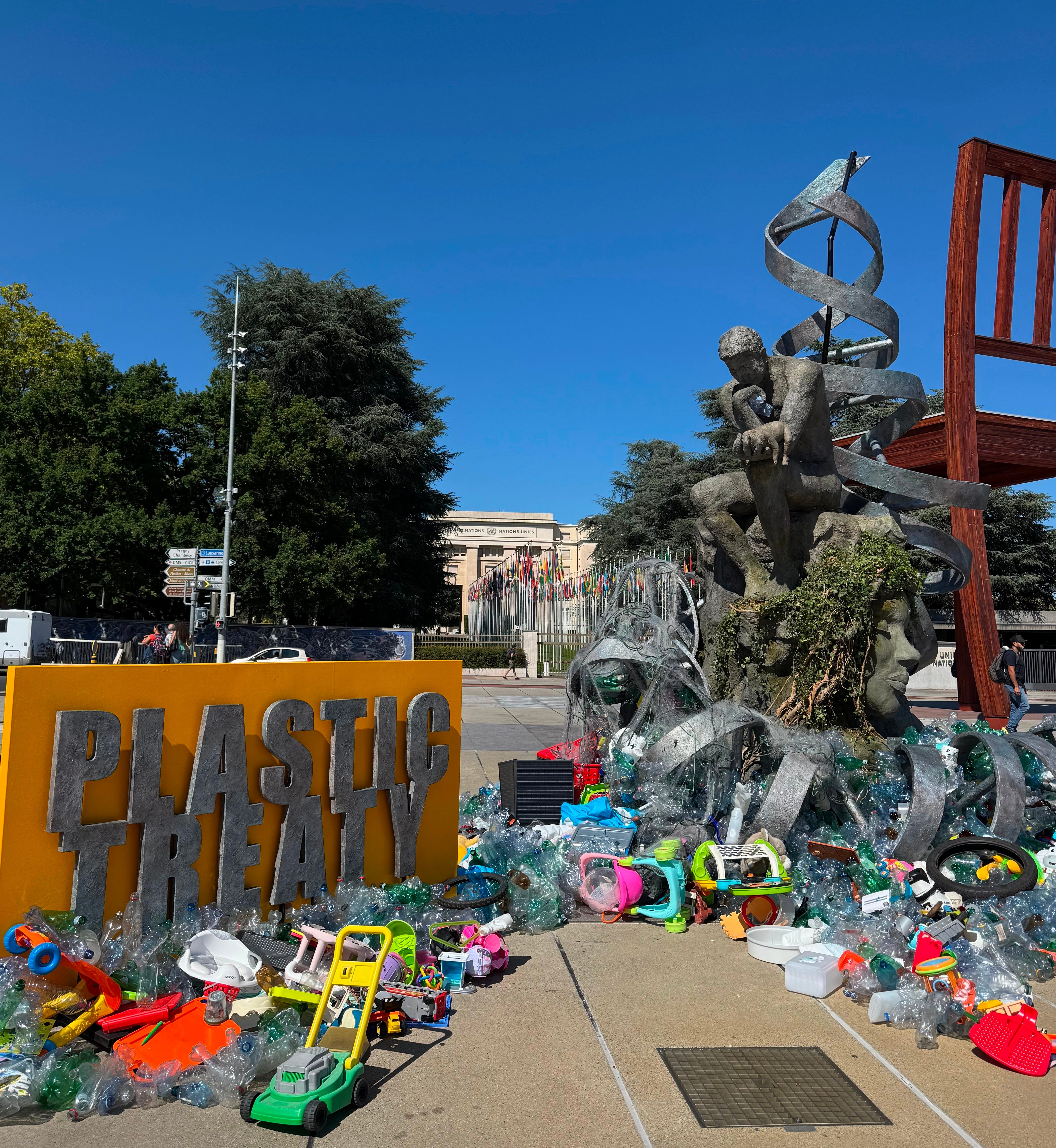
What’s at stake
The UN Plastics Treaty offers a chance to:
Set global rules on product design, material use, and reduction targets;
Fund transitions in lower income countries through fair and inclusive financing mechanisms;
Hold countries and companies accountable for their contributions to the problem - and their role in the solution.
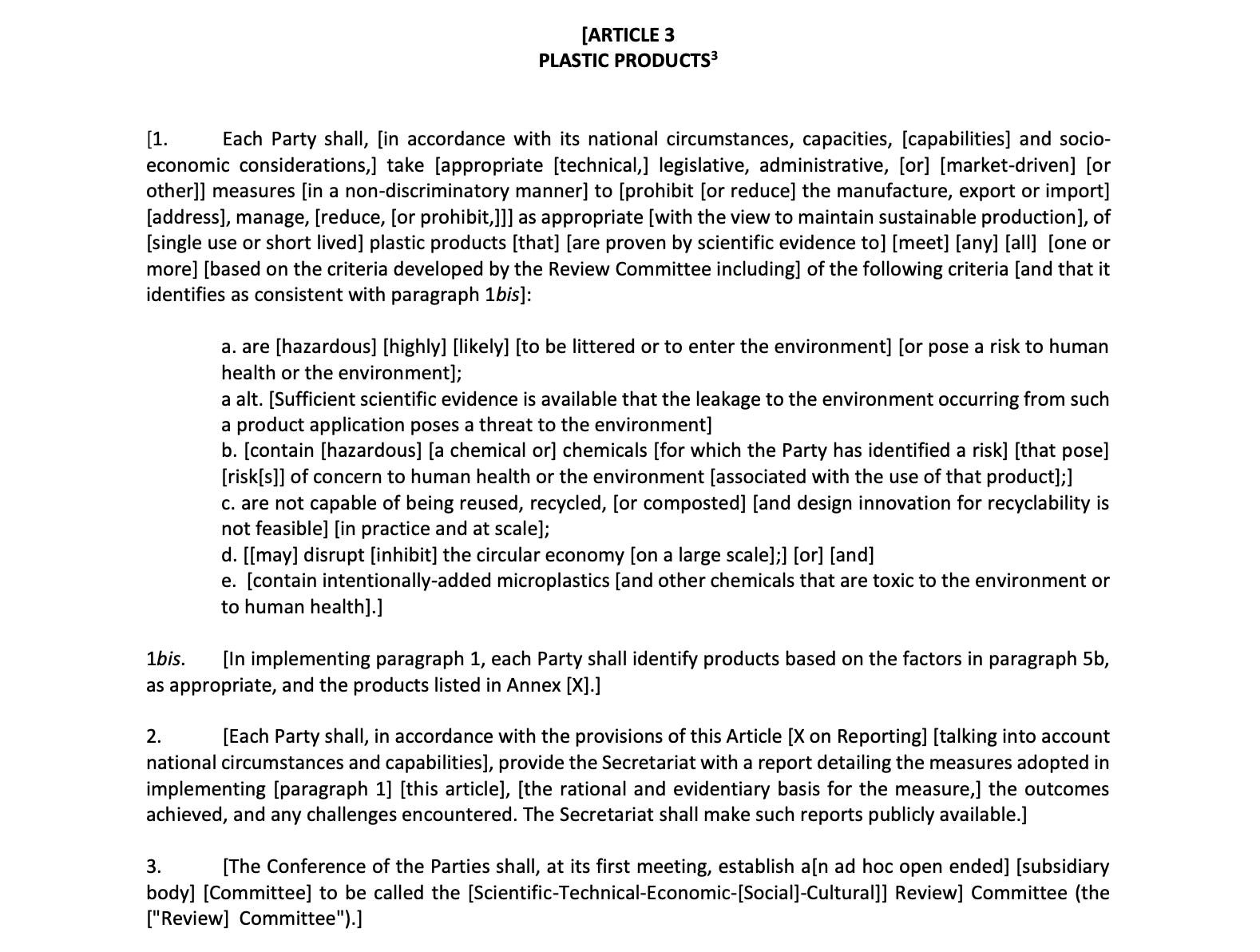
There’s a split between countries pushing for strong, binding global rules (the “High Ambition Coalition”) and others advocating for national targets and voluntary measures ( the “Like-minded Coalition”). At this stage, nearly every article in the draft treaty includes multiple, conflicting options, which in treaty lingo means the text is in bracketed. Brackets = [disagreement], and here’s a little taste of what that looks like:
Scope: Should the treaty cover [all plastics] or just pollution? Only waste, or also [upstream production]?
Measures: Should there be [caps on production]? Extended producer responsibility (EPR)? [Bans ]on certain [polymers] or [additives]?
Implementation: How will it be enforced? Who pays? What happens if countries don’t comply?
Finance: How will lower income countries be supported?
Monitoring: What counts as success — and how do we track it?
The big tension remains: Should the treaty be binding and global, or voluntary and national?
Where are we now (in Geneva, August 2025)?
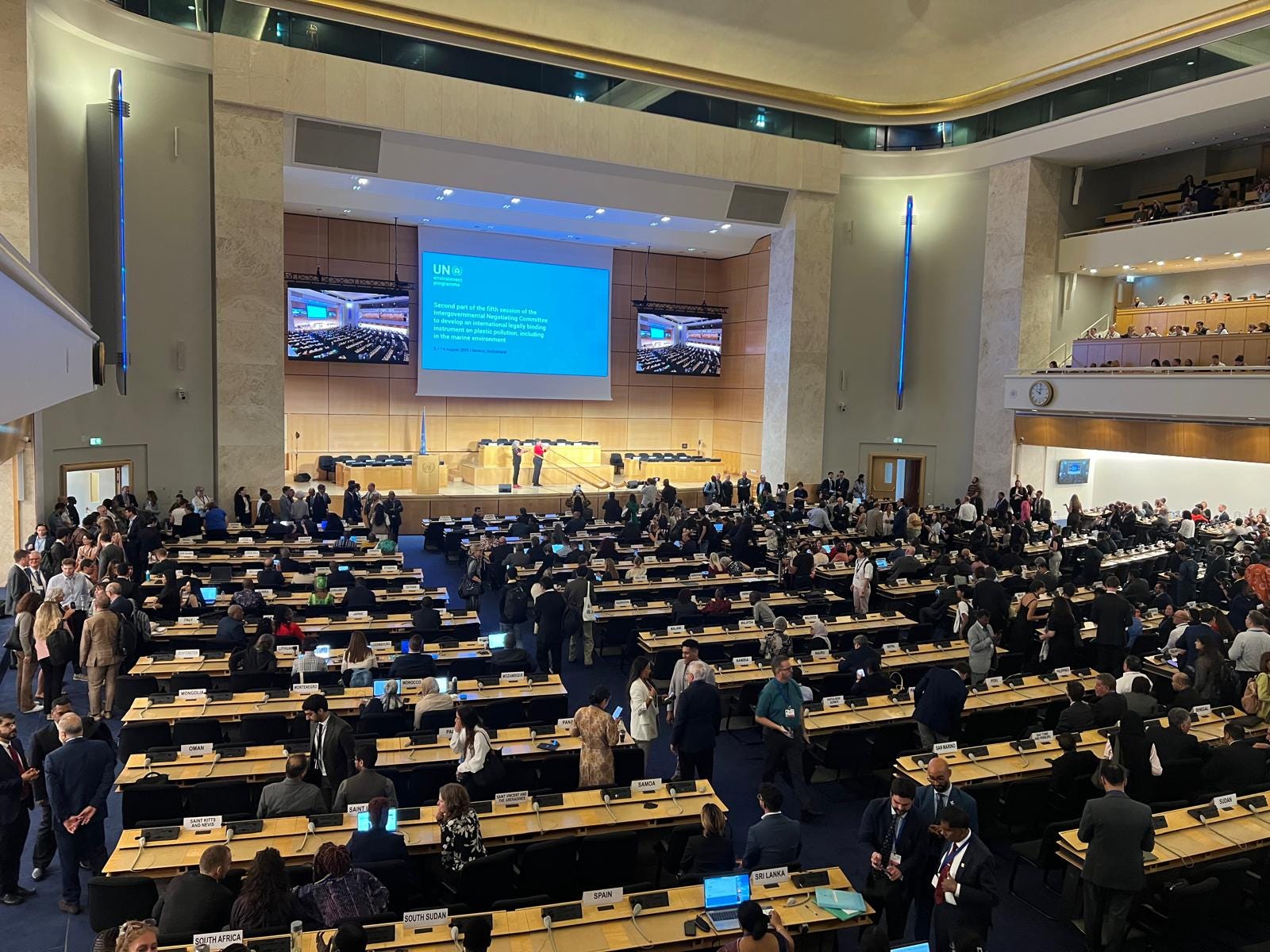
We’re nearing the end of the formal negotiation timeline (which had the goal of resolution within a year), but many questions remain unresolved.
The hope is that negotiations, which started yesterday (August 5th) wrap up by August 14th. But as soon as the talks started, debates began. Reports from the negotiation rooms show that countries were already disagreeing. This probably means long meetings that will lead to long nights. The treaty is based on consensus - which means all countries have to agree before anything is accepted. With 175 countries at the table, you can imagine total agreement is rare. In Geneva, negotiators are trying to focus on compromise solutions and may be moving away from the most ambitious and politically charged topics.
What could happen next?
In my view, the best-case scenario is a treaty that sets global rules to reduce plastic production, redesign products, eliminate harmful chemicals, and fund the transition to circular systems. A treaty that’s science-based, ambitious, and enforceable.
Best-case scenario:
Binding treaty with lifecycle scope, clear reduction targets, robust financing mechanisms, and strong enforcement.
Middle-of-the-road:
Treaty with flexible national plans, a mix of voluntary and mandatory measures, and general lifecycle language.
Worst-case:
A treaty that lacks ambition, relies fully on voluntary, nationally determined targets and focuses primarily on waste management.
But there’s a real likelihood of something weaker: a voluntary agreement, vague commitments and a heavy focus on waste management and cleanups. Important work, of course, but this won’t stem the flow of plastic that is drowning our society.
What I’m watching for at INC5.2
As negotiations unfold this week in Geneva, I’m particularly focused on the targets set by the treaty, and thinking about how this will play out in national implementation in the years to come. As I already heard spoken in one session, good regulation can drive innovation, whereas bad regulation can actually hamper innovation. I’m hoping we leave with good regulation, which can encourage research and development, catalyze funding in niche sectors, and encourage creativity - all good things in my book.
I’m also here supporting the Innovation Alliance, a coalition of entrepreneurs, innovators, and ecosystem enablers pushing for a treaty that’s not only ambitious, but inclusive of real-world solutions. Some of our key priorities include:
Advocating for financing mechanisms that support early-stage innovation, especially in regions where investment is currently lacking.
Ensuring that SMEs and informal actors aren’t sidelined in implementation — but supported and recognized as key players in circular transitions.
So, should you care?
Plastic touches everything in our daily lives: packaging, clothing, cosmetics, electronics and transport. The outcome of this treaty could change what products are made of, how they’re designed, who’s responsible for cleaning them up, and what infrastructure gets funded.
If done well, this treaty could reshape global supply chains and accelerate a shift away from our over reliance on plastic toward smarter design and use. If done poorly, it’ll be a missed opportunity where there is serious international momentum, where governments, civil society, businesses and scientists are advocating for change (you can feel it in the air in Geneva!).
Even if you’ve never heard of INCs or treaty texts before, the decisions being made now will shape the plastic landscape for decades. I’ll be writing another takeaway article in a few weeks with my thoughts on how this all plays out. In the meantime, wish us all luck as we advocate for a strong global treaty!


This certainly should make us all care more! Thank you for such a thorough overview of this important international
jnitiative. Well done!
This is super useful - thank you!