


Landfall on the world’s most polluted paradise
After four intensely complicated travel days, I finally glimpsed the infamous East Beach of Henderson Island. Peering through binoculars from the crow’s nest of the Plastic Odyssey vessel, I was fizzing with anticipation. With bare eyes, the yellow strip of sandy beach looked like paradise. I had just endured two sea-sick days crossing one of the most deserted parts of the Pacific ocean. Two days of nothing but endless waves, where we were lucky to spot even a solitary bird. Seeing land ahead and boobies curiously swirling above felt like arriving to heaven. I now could personally relate to seafaring movies or books when a sailor would gleefully shout ‘Land, ho!’.
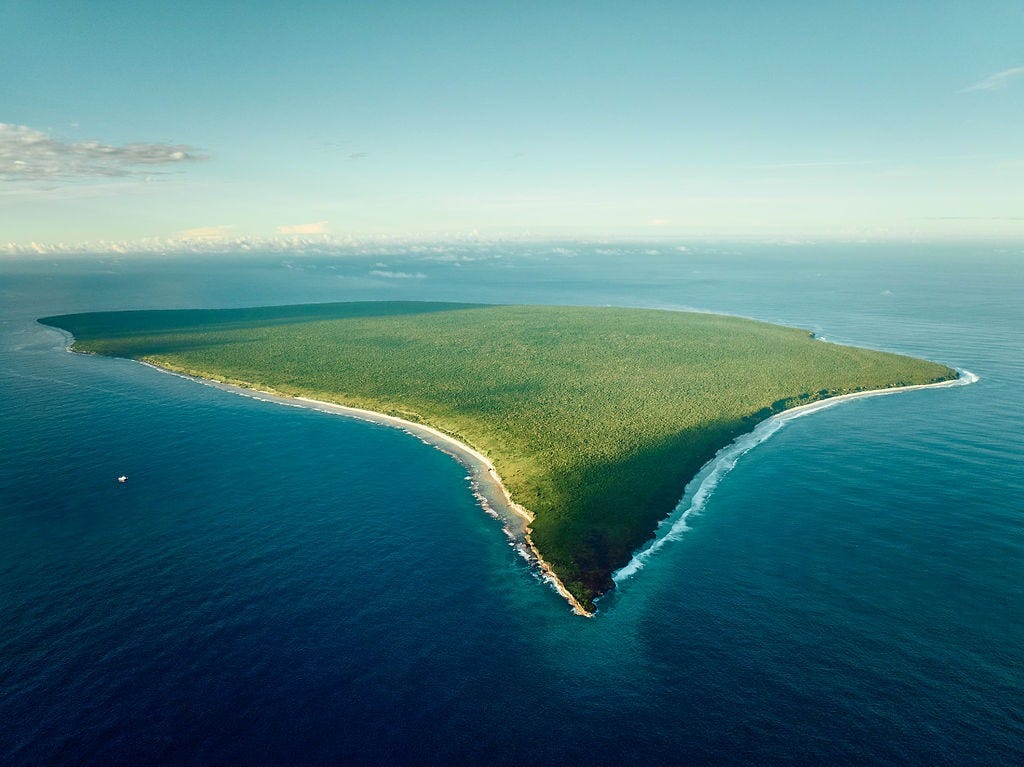
Focusing through the binoculars, the beach positively glittered. It should have been a landscape colored in beige, green, blues and brown, and maybe the occasional red puffed chest of frigate bird. Instead, the sand was punctuated by unnatural neons, pinks and dots of bright white and yellow. It was a visceral confirmation of the reason why we were there. Why a dedicated crew battled logistical, operational and financial challenges to get to this tiny, uninhabited atoll; to monitor the state of pollution and remove as much as humanly possible. We were a glorified garbage crew, here to pick the beach clean for the birds, the hermit crabs, and even the native Pacific rat. We had our mission, carefully strategized plans, manpower, tools and technology - we were ready! The goal? To restore this UNESCO World Heritage Site to a pristine state.
If only it would be that simple.


Infamous Henderson Island
Henderson Island’s East Beach became world famous in 2017 and hit the spotlight again in 2019 for its excessive debris accumulation. The atoll, rarely visited by tourists or locals from the ‘nearby’ Pitcairn Island, was recorded to be one of the most polluted beaches in the entire world. Scientists have been visiting Henderson Island rarely since the 1990s, mainly to study endemic and endangered birds, and in 2015 a pivotal study on the sheer amount of plastic made global headlines. Unfortunately, plastic is not new for this island. A study from 1995 described Henderson as having ‘oceans of garbage’ and a sailing travelogue from 1997 noted it was “absolutely covered with debris”.

Though there is no such thing as an “island the size of Texas made of plastic’” floating in the middle of the Pacific Ocean, there is a lot of plastic swirling in our seas. Litter from beaches, rivers and boats ends up in the ocean and due to winds, waves and currents, much of it ends up in large, slowly moving gyres. Unlucky islands (like Henderson, but also Rapa Nui and the Galapagos) find themselves in the path of these currents and slowly but steadily get inundated with waste that may have been deposited thousands of miles away.
The 2024 Henderson cleanup mission was spearheaded by the ambitious Plastic Odyssey team, an expedition circumnavigating the globe to share and support low-tech plastic recovery and recycling solutions. When they heard about the polluted island, and realized they would be in the neighborhood, founders Simon Bernard and Alexandre Dechelotte knew they had to make a detour. The team set to work navigating the bureaucracy to visit this protected island, assembling a crew and preparing Plan A, B and C for getting on and off the island. I joined the crew in French Polynesia as the on-board plastic scientist, armed with monitoring plans, measuring tape, scales and gloves. After spending years researching innovative solutions for marine pollution for my doctorate, I was ready to get out from behind my computer and get my hands properly dirty. The crew assembled and we set off from Mangareva, a far-flung island in French Polynesia on our two-day trip to Henderson.
So there I was, binoculars in hand, after months of planning, reading and preparing, finally seeing the mounds of trash with my own eyes. It was exhilarating and devastating at the same time. I was happy to have a purpose, to count and map the plastic, but sad to see just how much was visible, even from the boat. Soon, I landed on the island, which was a feat in and of itself, thanks to the shallow, sharp fringing reef typical of coral atolls, and was floored (should I say beached?). I dropped to my knees and gathered a handful of sand, as it flowed through my fingers so did wisps of fishing net, glints of pink, blue and yellow.
Plastic was not just on Henderson Island, plastic was in Henderson island.


Cleaning an island where nobody lives
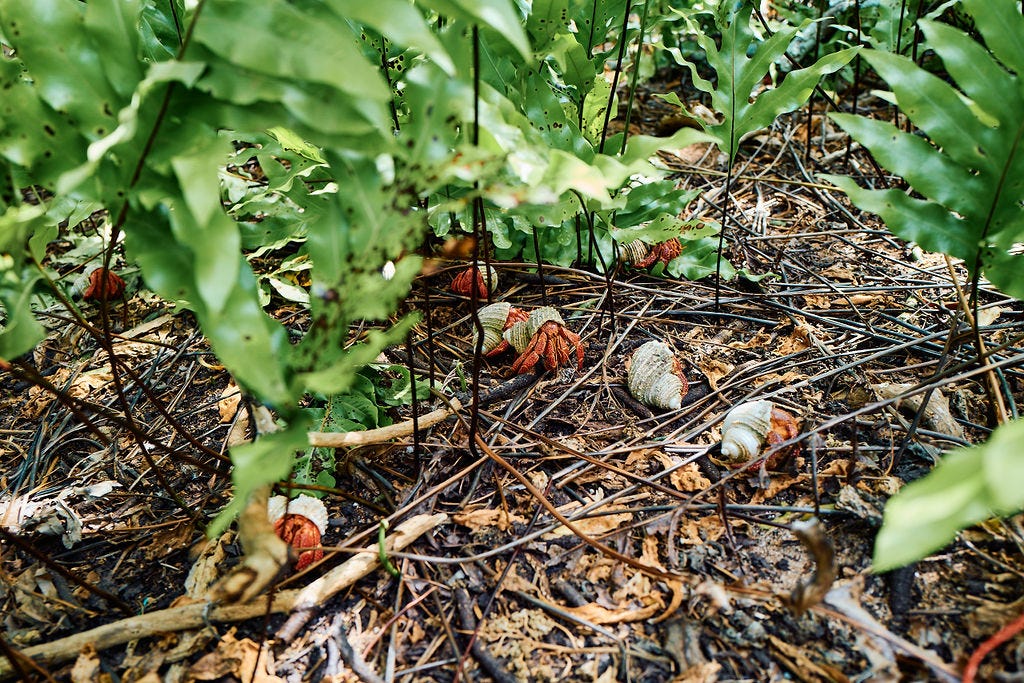
I could write a book about my week spent cleaning up East Beach. The island became a microcosm of the world; a society developed, a career in waste management started, peaked and retired, scientific studies implemented and abandoned, relationships formed and broke. Camp became home, complete with work, chores and a certain coziness, and the hermit crabs constantly crawling across our makeshift kitchen became part of the wallpaper.
Throughout the week, my job was to record the amount of waste collected and removed. The first time we successfully removed a load of plastic using a raft and winch system, the team cheered and we hugged each other on the beach. The counts in my note book gradually ticked upwards, 10 super sacks removed, then 15, then 20. At the end of the week, we managed to collect over 3.5 tons of plastic which had accumulated on East Beach since the previous cleanup in 2019. We also processed and removed 5.5 tons of plastic from the 2019 expedition. In total we managed to clear 9 tons from the beach: the weight of an elephant.
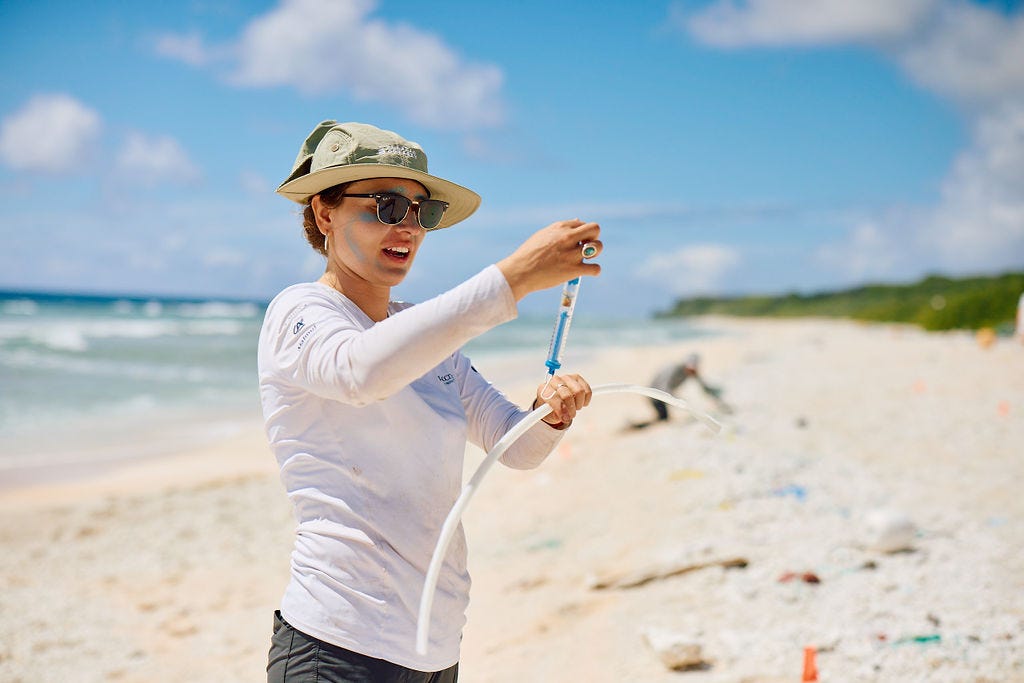
And removing the weight of an elephant was no easy feat. We faced brutal, tropical summer sun and lack of shade on the island. We would wake up while it was still dark, trying to get a head start on the sun and trudge endlessly up and down the beach. Though East Beach is only 2.5 kilometers (about a mile and a half), walking to the edge of the beach felt endless, let alone if you were dragging sacks full of waste. To clean the beach we had to get creative, stringing chains of buoys to pull through the shallow water, much easier than on shore. The Plastic Odyssey team even rigged a parasail to fly bags of waste over the coral reef (see the clip here). We would collapse into our sleeping bags at the end of each night, proud of the work done that day, while simultaneously calculating the work still to be done. After eight delirious days, we fell asleep on our final night knowing we’d done as much as we could, proud but saddened by the microplastics and fragments we know we’d leave behind.


Being on Henderson Island was an emotional experience, at times it even felt religious. I felt so incredibly lucky to be on this speck of sand, where so few humans will ever get to see the bright pink sunset as frigates wheel overhead. So few will spot the endemic Henderson fruit dove or Henderson petrel, which nest only on this island. How incredible to spend a week serving nature, helping a beach transform from polluted to paradise.


Turning off the tap
It has been a year and a half since I returned from the Pacific, but the memories stay strong. The research we conducted on the island has been published, and new plastic has washed ashore on the island. What I learned on Henderson is that there is no ‘away’ with our waste. Even if we live in developed countries with advanced waste management, we cannot convince ourselves our consumption is not tied to waste in our oceans, our air, our bodies and on that beach.
In 2019 the beach was fully cleaned, in 2024 we went back to find it covered. If East Beach was a canary in the coal mine of our consumption, it would be dead. We cleaned the beach last year, but I fear the canary is again battling to breathe. We can keep cleaning our most precious places, fighting the good fight against consumption and waste, but perhaps there is a better way.
As we like to say in the plastic world, if your bathtub was overflowing, wouldn’t you first turn off the tap?
This year I’ve focused a lot of my attention on regulation and the United Nations Plastic Treaty. I know we need strong, international commitments to turn of the tap of production and save our oceans, our beaches and places like Henderson from pollution.
Further reading
Plastic Odyssey is continuing their work restoring UNESCO World Heritage Sites and educating on plastic solutions. Check out their expedition to Aldabra Atoll and support their work here.
The Pitcairn Island Marine Protected Area is one of the most biologically unique and rich ocean ecosystems in the world. Find out more here.
The United Nations Global Plastics Treaty is one of the most important tools to turn off the tap of unchecked plastic production. Check out my article on the treaty here and sign the Greenpeace citizen petition for an ambitious treaty here.
Two articles with the scientific results of the Henderson Expedition have been published open access
The Henderson Island microcosm: plastic pollution accumulation in the South Pacific (Dijkstra, 2025)
Assessing strategies for remote island beach cleanups: Lessons from the Pacific and Alaska (Dijkstra & Tirman, 2025)
A dedicated website with logs, pictures and videos of the Henderson expedition is here. There is also a feature length documentary about the expedition in French and English, want to host a screening? Get in touch!
Special thanks to Howell Conservation Fund for their support of the scientific mission, check out their catalytic grant program here.
The incredible photos in this blog are by Olivier Löser, find him here.