


Continuing my series unpacking what actually goes on at the UN Oceans Conference and behind the scenes of the plastics treaty negotiations, welcome to my honest account of New York Climate Week.
New York Climate Week, maybe you’ve heard of it, maybe it means nothing to you. For me, it was always something I was vaguely aware of but never fully on my radar, mostly because I haven’t been living in the US and I don’t work directly on climate.
This year, though, the invitations started rolling in. When my friends at Plastic Odyssey asked me to join an event and, on the very same day, my dad offered airline miles that were about to expire, the universe had clearly decided for me. I booked a relatively last minute flight to the Big Apple, not sure what I had in store. When I talked to friends who had been before they said somewhat ominously “its intense”.
What exactly is New York Climate Week?
New York Climate Week aka NYCW aka Climate Week NYC aka CWNYC as I’ve seen it written many different ways kicked off in 2009. The event coincided with the yearly UN General Assembly (UNGA) meeting happening at the UN headquarters and was a way to keep the climate conversation top of mind while all the important delegates were in the city. Since then, it has become the place for the “who’s who” of the climate and sustainability world to host events, give presentations, and network, in other words lots of free food and open bars.
The main platform is hosted by a non-profit called Climate Group, but there is no central venue and instead organizations and businesses host hundreds of events all over the city in all types of locations. This year, I heard of events happening in saunas, on islands, in the basement of bars, while running around Central Park, on a boat and on the 91st floor of a fancy building. I made it on a boat and to the 91st floor, but the sauna will have to wait ‘til next time (and running is never going to happen). These events range from exclusive invite-only breakfasts with C-suite executives to awareness raising events open to the general public. For a full week, New York is swarming not only with UN delegates - and their extensive entourages - but with climate wonks and sustainability professionals.
What is it like on the ground?
It’s the Big Apple! The streets are buzzing, the subway is screeching, the pizza is delicious. Because Climate Week is dispersed across hundreds of venues, you don’t see the usual clusters of fleece vest and lanyard-wearing conference-goers. Most New Yorkers barely notice it’s happening, unless they commute near the UN, where traffic is jammed by bulletproof Escalades.
My Climate Week
To those “in the know”, there is a LOT going on. Too many events to wrap your head around, let alone get from one end of the city to the other to attend. I was speaking at three events for Climate Week, two on Monday and one on Tuesday. Battling jet lag and a layover from hell (thanks to a bomb scare in Dublin that turned out to be a medical device), I decided to focus on staying sharp for my events.
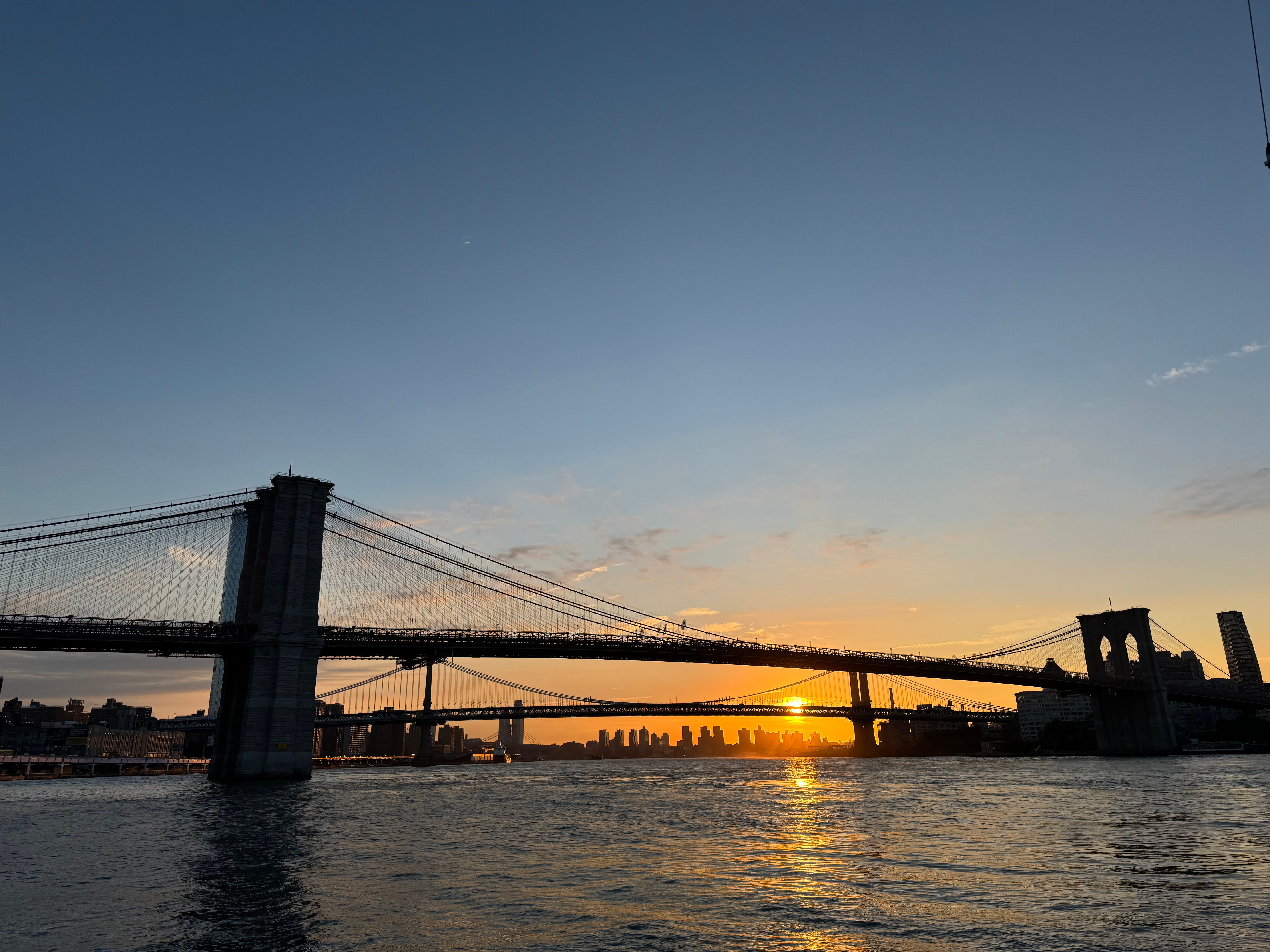
On Monday I woke up at the crack of dawn (thanks jet lag) and managed a walk along the wharf to catch sunrise over the silhouettes of skyscrapers in the Lower East Side and the Brooklyn Bridge. I had an emotional moment watching the sky lighten; New York is a city that holds both feelings of home and heartbreak for me. I wiped a tear and smiled at a dog walker, surprised at how many people were out and about at such an early hour. It truly is the city that never sleeps.
Speaking gig 1: Climate Film Festival
After caffeine and a shower, I was off to my first event - a lightning talk at the Climate Film Festival with Alexandre Dechelotte to talk about the power of science and storytelling in the context of the documentary made about the Plastic Odyssey expedition to Henderson Island. We shared a big hug in front of the SVA Theater, laughing in disbelief that we were meeting in New York City after meeting on a remote Pacific island. Then we parted ways, walked in opposite directions, turned, put on big smiles, walked to each other and shared another big hug. Alex had a cameraman with him, filming another chapter in the Canal+ documentary series on Plastic Odyssey, and he needed to get the shot from multiple angles. And let me tell you, having to ‘replay’ moments for a second or third time (without nervous laughter or awkward commentary) is not my strong suit! Sorry to my high school drama teacher, you taught me well…but I’m still incredibly awkward in front of a giant camera.
I digress. After some filming on a park bench (very NYC), we headed inside for our talk. While images from the Henderson Island expedition played in the background we talked about the importance of including both science and storytelling in the expedition. Science to offer legitimacy, collect data and contribute to monitoring and decision making. Storytelling to increase awareness, inspire and create behavior change on a larger scale. By including both, the expedition could maximize impact and we reflected on how science needs more storytelling and storytelling needs more science.

Speaking gig 2: The Ocean Awakens
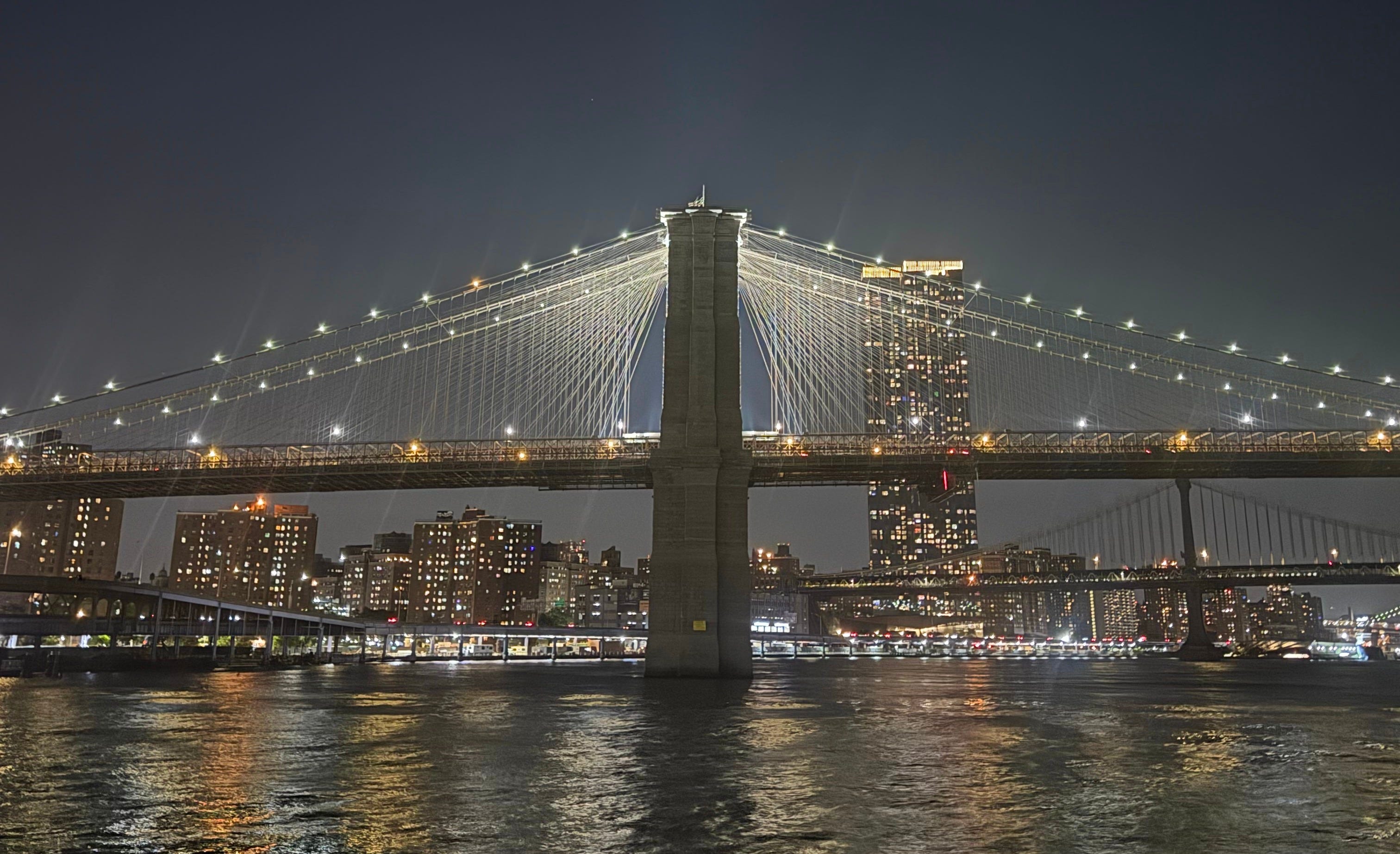
First talk done, Alex and I had some great conversations with audience members, snagged a slice of pizza from the green room and hailed a cab - on to the next. And this was the big one. Plastic Odyssey had organized a half-day event, inviting well-known names to speak about ocean action, on a tall ship, overlooking downtown Manhattan and the Brooklyn Bridge. No big deal (it was a very big deal).
The ship was beautiful and the venue could not have been more fitting. The sun was shining, reflecting off the skyscrapers of the Financial District. My jet lag mixed with energy from a successful first talk and nerves for the upcoming panel into a pleasant delirium. The Ocean Awakens panels from Act I, II and III (a nod to Star Wars) flew by, we heard about corporate action on environmental issues, innovations in packaging and marine transport, the importance of financing and finally it was our turn : Act IV on storytelling. Benjamin Von Wong opened with his signature blend of large-scale art and activism; Andi Cross spoke about finding ‘positive deviants’ around the world; Ana Blanco reminded us that we all have marine ecosystems worth protecting close to home; and Mark Haver, ever the performer, kept the crowd engaged before unleashing us all on the open bar (with blue margaritas!).


Fabien Lamaison from Plastic Odyssey Fund had pulled off an incredible event, practically as a one-man show. Night fell and part of the group deliriously walked to Grain de Sail II a cargo sailboat that carries wine and chocolate with minimal emissions. After a tour of the ship and a taste of the goods, I staggered back to my hotel. New York Climate Week day one was over.
Speaking gig 3: The plastic / climate solution
Not much sleep was had as I had an early alarm to prepare for my third and final talk on Tuesday morning. The talk “Can managing plastic waste be a climate strategy for the built environment?” was hosted by CRDC Materials at the Citco building on Park Avenue - not too shabby. I took the subway uptown as I practiced my notes over and over. My presentation today would be more scientific, I was discussing a novel framing of the waste hierarchy, a framework used to make waste management decisions, that could be useful when deciding how to spend extended producer responsibility (EPR) fees. If that sounds jargon-y, its because it is and I was trying to strike a balance between offering some technical insights while being understood by the general public. I was excited about this session because it was a chance to present alongside Ross Gibby and Don Thomson from CRDC, a company that turns mixed plastic waste into concrete aggregate. I learned about their technology during my PhD and have been following them for years. We would be joined by Belter Tech, a sustainable construction company. The goal: convey the benefits of considering plastic and climate as twin crises, not separate challenges, and how solutions that tackle both can deliver outsized impacts.
The talk went smoothly (despite a late start thanks to Trump’s extended motorcade on Park Avenue), and the audience asked interesting questions, turning the panel into a true dialogue. As I walked off stage, I let out a HUGE sigh of relief. My role at climate week had officially changed from speaker to attendee.

The whole panel was recorded and can be watched back here. Enjoy!
Climate Week as an Attendee
Though I was no longer responsible for presenting, being an attendee at Climate Week is no less hectic. I found myself racing around the city, trying to prioritize on the go - could I make it to Bushwick for a mycelium and mangrove inspired happy hour? Which innovation summit would be most useful to attend? Will the next event have enough hors d’oeuvres to count as lunch? I ended up selecting a few priority events, while also squeezing in visits to friends and family. Sleep would have to wait. A short view of some other NYCW events:
Plastic Treaty Side Event at the UN General Assembly (UNGA) - critical for my work with the Innovation Alliance for a Global Plastics Treaty. Since the UNGA was in session, getting in to the UN building involved more security than the airport, but the session was an opportunity for member states to reinforce their view that we need a strong global treaty (see my other posts on the treaty for more details!)
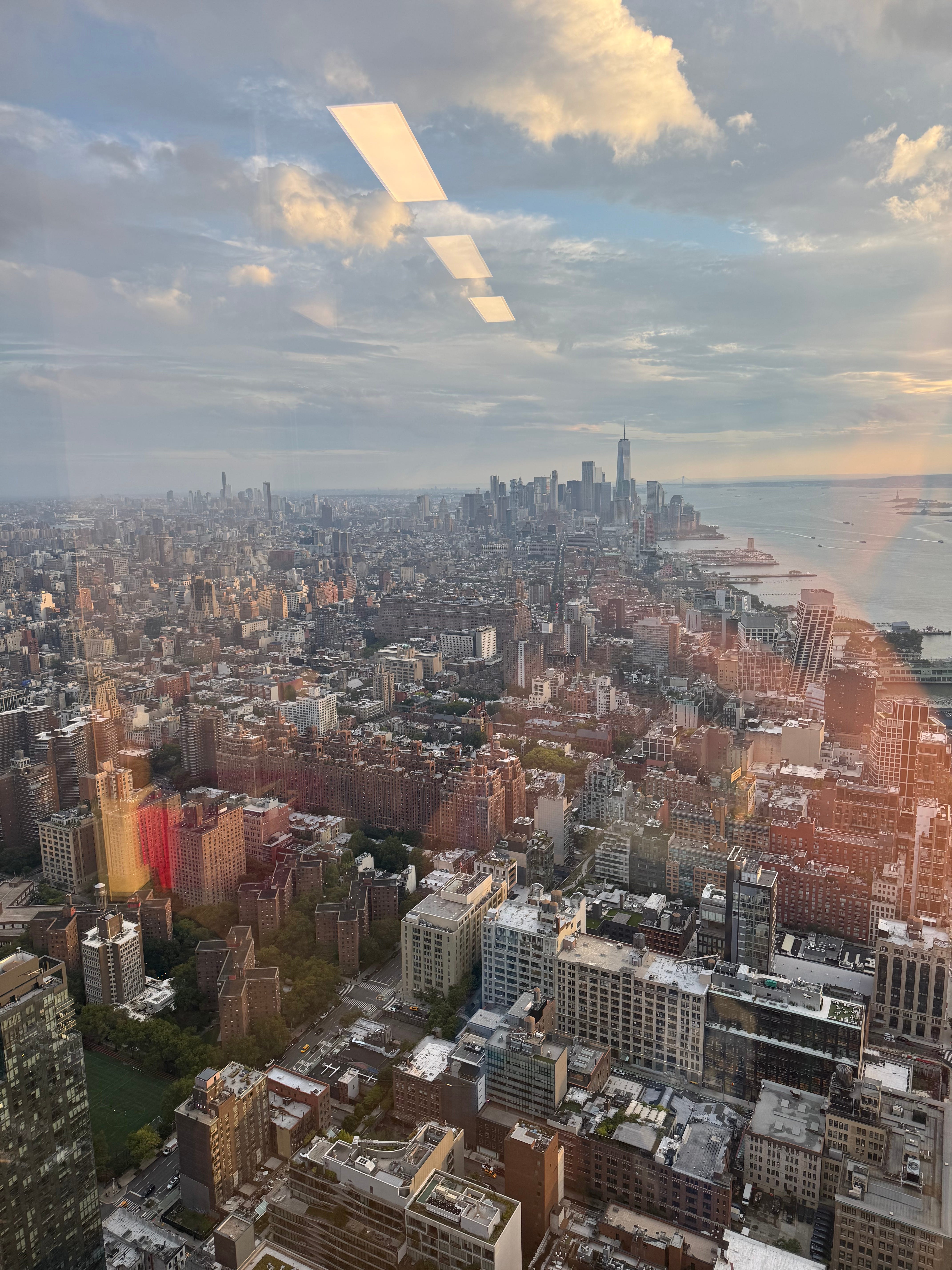
The Reassembly - a showcase by Regeneration.VC featuring innovators, keynotes (including the fantastic talk by Svanika Balasubramanian) and ending with a 91st floor rooftop mixer. This event had the most interesting talks, novel ideas and probably the best views.
Dialogues in a Gallery - an intimate discussion in a gallery (with Picasso sketches framing the panelists) on retail and consumer packaging impacts. The panel was a nice spread of stakeholders expertly moderated by Nico van Exel. Smaller events are definitely better for targeted networking and connections.


Is it worth going to NYCW?
For me, yes - mainly for the speaking gigs and the chance to reconnect with partners and collaborators. I’m trying to build out my portfolio and network for the Innovation Alliance. NYCW is well known in the industry, and since so many innovators and organizations would be in one place at one time, it felt like an important place to be. I was lucky to have airline miles to cover my flight and friends and family to stay with, which made the (normally prohibitively) expensive trip to NYC relatively affordable.
As an attendee, figuring out how to make the week “worth it” would be challenging. It’s hard to tell which events will be the best opportunities for networking or engagement, and some fantastic events I only heard about after the fact. Events are scattered, oversubscribed, and often overlap leading to decision paralysis and logistical dilemmas. By hosting an event, you at least can guarantee that those interested in a specific challenge, solution or sector will come find you. Will I go to NYCW in the future? Let’s see. New York in September is quite lovely, and I’ll take any excuse to see my cousins and their babies. So perhaps I’ll see you there next year (and if you need a panelist or moderator, give me a shout!).
Thanks for reading this latest “behind-the-scenes” reflection. If you’re curious about other big sustainability events and what is really like to be there, check out more below!

Behind the scenes at the UN Oceans Conference

What really goes on at the largest ocean conference...
The UN Plastics Treaty failed, but there might be a silver lining

The United Nations Global Plastic Treaty has failed, talks have collapsed and countries are deadlocked....
Loved reading this one! Did some prep work for different panels, mostly private sector, so nice to get a different perspective. Plus your writing is a pleasure to read, well done!