


After my last post on the struggle of sustainability - complicated trade-offs, limited options - I got hit with unexpected backlash. I posted a snappy LinkedIn teaser about my blog (in hindsight, too snappy) and a commenter called me out for “plastic misinformation campaigns dressed up in folksie passive strategies”. Ouch.
My first instinct was to get defensive, but on the advice from a wise friend, I reached out instead. To my surprise, the ‘haters’ responded thoughtfully and kindly. We toyed with the challenge together over LinkedIn messages. What started harshly ended as honest feedback. Is there hope for online discourse yet?
The interaction reminded me that sharing my ideas also means inviting critique, and that is actually a good thing. So if you disagree with anything here, please tell me! Let’s talk, learn and maybe find some common ground.
This is the first in a three-part series where I explore what a personal sustainability “practice” looks like to me. Today’s focus: Waste Less.
My sustainability practice
Like yoga, I’ve begun thinking of sustainability as a practice. I used to shy away from some of the woo-woo phrases and concepts extolled by yogis, but maybe a 5,000 year old art form that blends spirituality, health and mindfulness and is practiced by millions around the world is worth taking cues from. The term practice is used to imply that there is no end goal, no ‘winning’ and the journey itself is the point. Some days are better than others, but you can also push yourself and try to get better. Its both forgiving and encouraging, which is how I try to live sustainably.
My sustainability practice has three core principles:
Waste less
Choose local
Don’t beat yourself up in the process!
This post focused on the first principle and Parts 2 and 3 will follow.
What ‘Waste Less’ means to me
When I first wrote this principle I wrote “consume less” but that didn’t sit quite right. Telling people to consume less feels preachy and invasive. Plus I think what is key is creating less garbage, extending product lifespans and reducing excess waste.
For me, this means:
Reducing food waste
Buying second-hand clothes and thrifting
Choosing quality over quantity
Repairing instead of replacing
Finding new purposes or uses for products I might toss
Being (mostly) intentional about single-use products
How I’m tackling food waste
I’ve become super aware about food waste and trying to reduce it. Sometimes this means finishing my plate when I’m already full at restaurants, but more often it means getting creative with wilting spinach or using slightly sour wine to deglaze pans.
I also recognize for myself, if I buy less I’m likely to waste less. I try to be thoughtful about grocery shopping to not over stuff my fridge and forget about veggies going bad at the back of a shelf. I also started home composting in my garden, diverting a small amount of food scraps from landfill to turn into high quality soil for my garden. I googled at home composting and bought a plastic bin and tried my hand - a work in progress, but already rewarding.


Resisting fast fashion (most of the time)
I try to resist the temptation of cheap fast fashion and prioritize higher quality clothes I know will last longer. I learned visible mending from a dear friend and took my jumpsuit to fix up at her weekly Amsterdam repair cafe. I challenged myself to not buy anything new for three months (thanks to the Slow Fashion Season campaign) and now have seriously reduced my shopping habit.
Living circular
I take inspiration from those around me. A friend who told me she put everything she wanted to toss on an online marketplace (everything) ensuring her things would find a new, even old pop CDs! It’s her way of emulating the circular economy. In high school, I remember showering with buckets at our feet in summertime, using the water for our garden during California droughts. My mom made dozens of jars of jam from the overflowing plum tree in our yard, preserving the fruit we could never finish.
Practice (does not make) perfect
But I’m far from perfect. I toss old clothes into those big donation boxes in Amsterdam when my local consignment shop won’t take them, even though I know this is “wishcycling”. I can wishfully imagine my clothes being carefully sorted and thoughtfully redistributed or going through high-tech recycling, with fabric unwoven and rewoven into new styles. But I know the reality is much less sparkly, and likely involves massive depots full of textiles or landfills. Maybe my old tank top ends up choking a beach in Ghana, the polyester slowly shedding microplastics into sand and sea…. Not wanting that future for my clothes doesn’t make it less likely, which is why I try to find new homes through resale, repair and my personal favorite, clothing swaps.
If you want to go deep into the reality of clothes donations bins, I highly recommend this investigative piece by El País.
I'm also still a sucker for "good deals." The dopamine hit of shopping is real, and most of my clothes are second-hand, gifted, or bargains. I'm working to change this, recognizing that feelings are fleeting and quality matters more than trends, but I doubt I'll ever completely break the habit.
My single-use cup nemesis
Coffee cups have become my sustainability nemesis. I try my hardest to avoid them when I can, knowing that in the scheme of things its a tiny thing. I carry a reusable white metal tumbler with “Bridesmaid” in cursive across the front - a gift from bride nearly eight years ago. I love this tumbler and even though my bachelorette duties have long lapsed, it still serves a purpose, thus it stays in rotation!
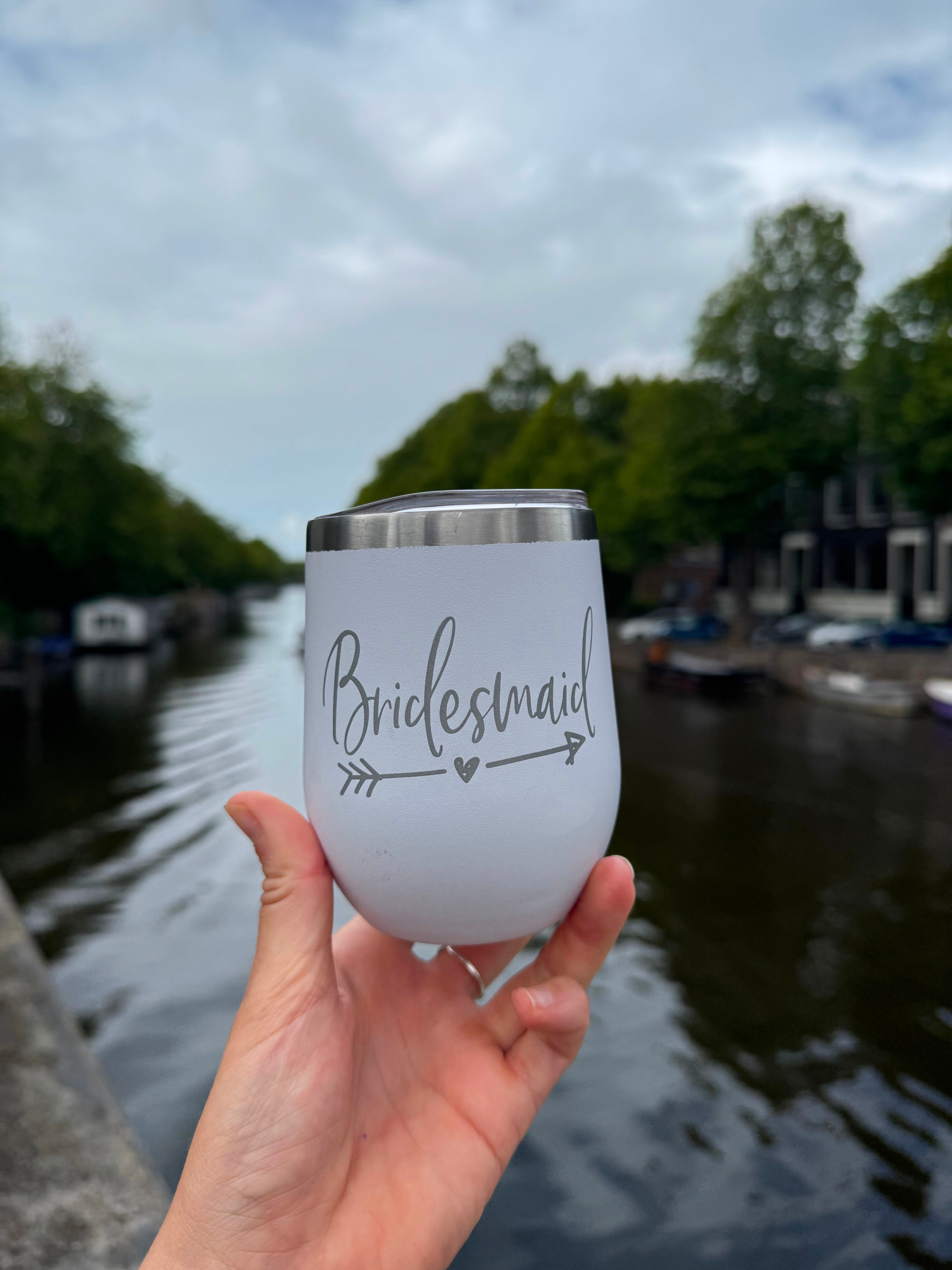
If I forget a reusable, I try to sit down and drink from a mug. A few years ago in San Francisco’s Hayes Valley, I went searching for a cappuccino to drink from a real cup. I swear I tried ten places, each offering to-go cups only, even for dine in customers and coffees. I was horrified. for all the slowing down COVID forced, it also increased our use of single use plastics.
But I was determined that Saturday morning. If I could find a real cup, it would be one less single-use cup thrown away. (Yet grocery store sushi - with its abominably tiny plastic soy sauce containers and ginger packets - is my guilty pleasure. We all pick our poison). Back in San Francisco, I had the luxury of time to walk around find a spot that would serve me in ceramic. It ended up being a nice French brasserie and the bill was rather steep: much more than the dozens of corner stores and coffee places serving cheaper brews in disposable go cups.
This example highlights the challenge: choosing the sustainable option often requires time, money, or both, privileges not everyone has. What used to be the norm (reusables, repair, real plates) now feels like a luxury.
Small experiments, real impact
Most of my sustainability practices started as an experiment that slowly became more of a norm; compost, repairing, packing my reusable cup, slowing down on shopping.
Through my work, I’ve done deep dives into the benefits of reusable products instead of single use. My alma matter in Amsterdam switched from single use coffee cups to these blue BillieCups that you pay a fee for at check out, which is returned (or taken off your bill) if you bring it back. Many innovators and pilot projects are fighting the good fight for reuse, trying to remind us that we used to live in a world without cheap styrofoam takeout containers and disposable beer cups. There is evidence that reusable systems are better for the environment: create less waste, have lower carbon impacts, create jobs and may even be preferred by the consumer (like me on my mission for a ceramic cup of coffee). When we support these systems, with our wallets and willingness to participate, we are showing the market that sustainability is important and asking consumers to do a tiny bit more work (in returning a cup, for example), doesn’t have to be an insurmountable barrier. Why not give it a try?
I encourage you, dear reader, to think about how you could potentially waste less in your daily life. If there are small (or big) switches you could make. If there was an experiment you could run to reduce food waste and find ways to save or cook up veggies you’d normally toss. If you could start a compost bin at home, or find a repair cafe to take your broken microwave instead of ordering a new one on Amazon. Perhaps its a fun DIY to dye a favorite stained t-shirt, giving it a new life in a new color. Or you might search for a refurbished phone over new when you need an upgrade. There are SO many ways to reduce waste by consuming more thoughtfully. No need to strive for perfection, just practice every now and again and it might make you think more creatively, enjoy more fully and see the world a bit differently.
Thanks for reading. I’ll share Parts 2 and 3 of my sustainability practice (choose local and don’t beat yourself up in the process) in future posts. In the meantime, I’d love to hear how you’re practicing sustainability in your own way.